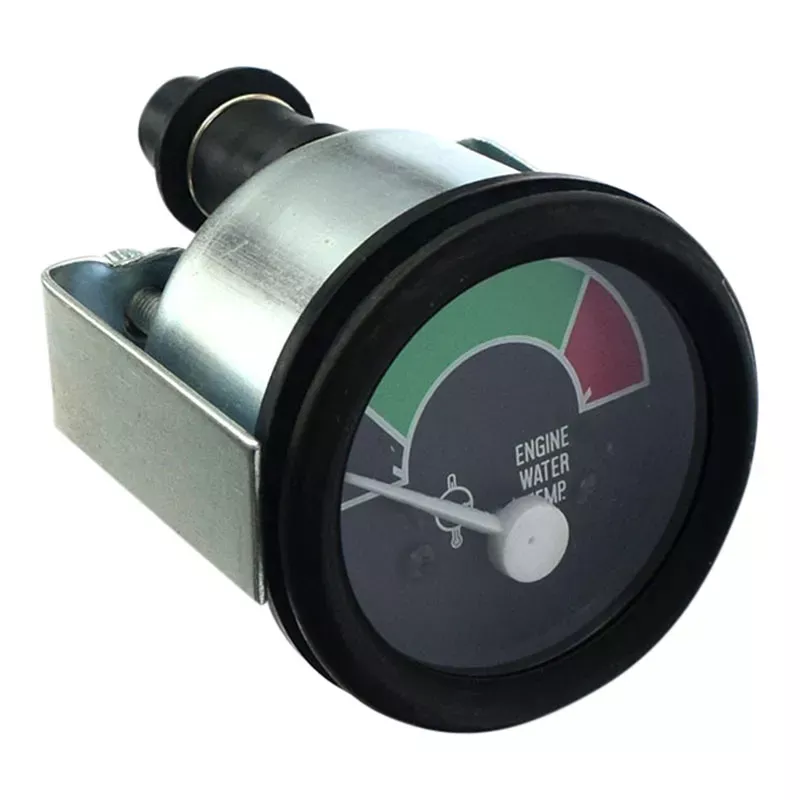
Nothing’s worse than watching your tractor’s temperature gauge sit at cold all day when you know the engine’s hot, or having it peg out at full hot when everything seems normal. If you’re flying blind on engine temperature because your gauge gave up the ghost, you’re one overheating episode away from turning a working tractor into an expensive rebuild project. This replacement gauge gets you back to knowing exactly what’s happening under the hood so you can catch problems before they cost you big time.
What You’re Getting
- Direct replacement that fits your dash opening perfectly without modifications
- Clear, easy-to-read dial face that won’t fog up like old gauges
- Quick response to temperature changes so you catch problems early
- Works with your existing temperature sender – no extra parts needed
- Durable construction that handles vibration and moisture like the original
Built for Real Farm Work
Your John Deere 20 and 30 series tractors were built to work hard, whether you’re running a compact 820 for chores around the farm or pushing a 2130 through tough field conditions. These machines handle everything from loader work to heavy tillage, and knowing your engine temperature is critical when you’re working them hard in hot weather or pulling heavy loads.
Made to Last
This gauge uses the same quality construction as the original – built to handle the constant vibration and temperature swings that farm equipment dishes out. The internal mechanism stays accurate and smooth, while the sealed housing keeps moisture and dust from fouling up the works.
Installation Notes
Installation takes about 30-45 minutes with basic tools. Always disconnect the battery first to prevent any electrical damage. The gauge connects directly to your existing temperature sender wire, so if you’ve been having erratic readings, make sure to check that sender and its wiring while you’re at it. After installation, the gauge should read cold at startup and gradually climb to normal operating temperature as the engine warms up.